
When people price out painting an apartment, they usually think about square footage and the number of rooms. In a lot of West Village apartments, that's the smaller part of the bill. The walls themselves go fast. What takes time is everything around them: cracked plaster, layers of old paint on the trim, crown molding, divided-light windows, paneled doors, and getting the crew and its gear up and down a walk-up's stairs every day.
This post breaks a West Village painting quote into those three pieces, prep, detail and access, and shows how each one adds up. For overall apartment ranges across Manhattan, start with our guide to what it costs to paint a Manhattan apartment.
What the buildings are like
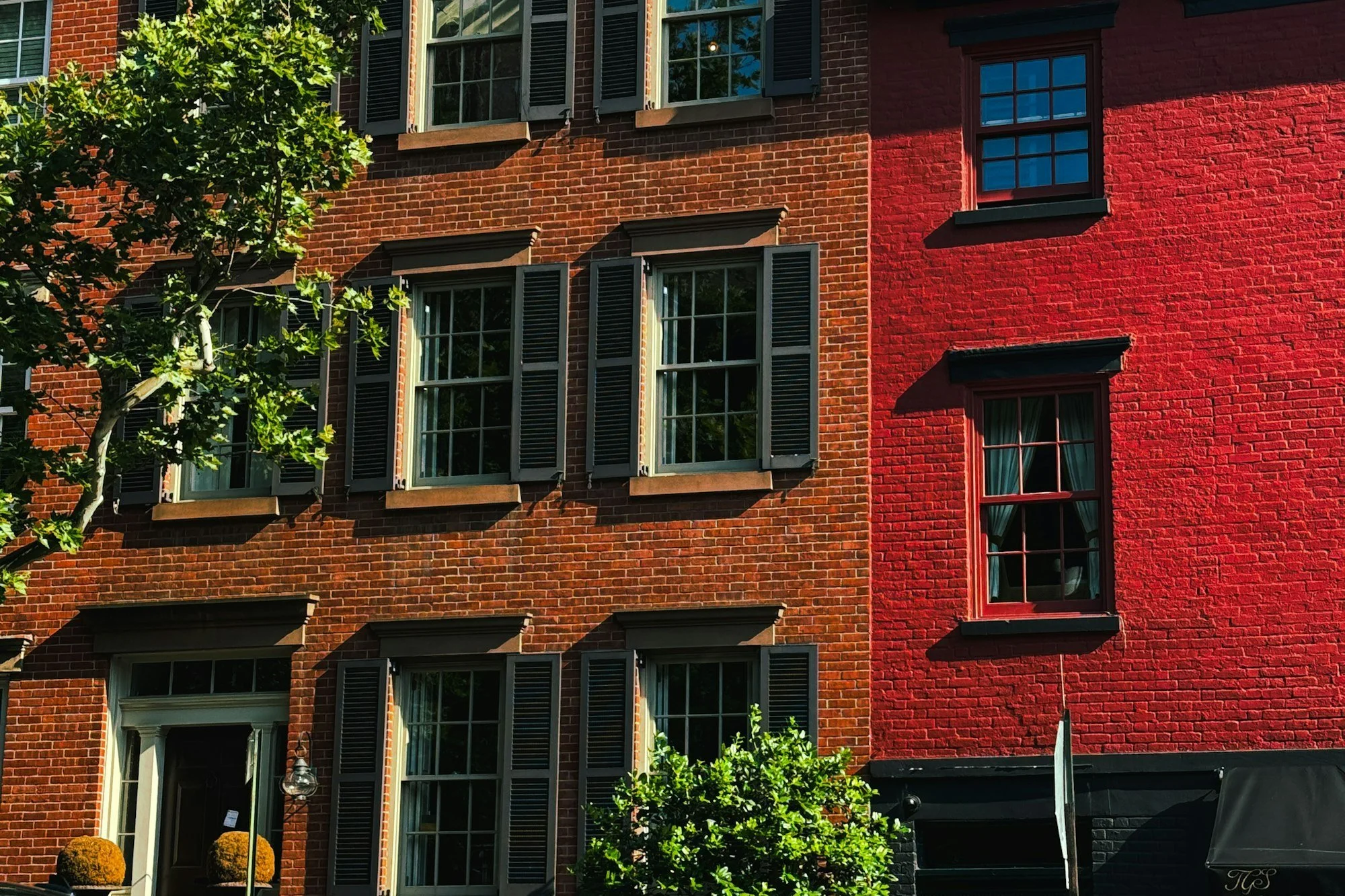
Much of the neighborhood sits inside the Greenwich Village Historic District, which the Landmarks Preservation Commission designated on April 29, 1969, according to the city's designation report record. Tony Sargent, an associate broker with Compass, writes in his guide to living in the West Village that "prewar walk-ups and elevator co-ops make up a large portion of the housing stock," with smaller units and period details, alongside brownstones, rowhouses and a smaller number of condos.
For a painter, that description says a lot. Older buildings mean plaster walls, original or replaced woodwork with many coats of paint on it, and windows and doors with more edges to cut in. Walk-ups mean everything gets carried.
Do you need a landmarks permit to paint?
For interior painting, almost always no. The Landmarks Preservation Commission's permits page says an LPC permit for interior work is required only when the work needs a Department of Buildings permit, when interior work affects the exterior, or when the interior itself is a designated interior landmark. Repainting walls, ceilings and trim inside an apartment doesn't fall into any of those.
The exterior is different. The same page says you don't need a permit to "repaint a building exterior to match the existing color." Changing colors on a facade, front door or window frames is another matter, and that kind of change in a historic district goes to LPC. If your project includes the outside face of windows or a front door, ask the building owner or managing agent before anyone picks a new color. Your co-op or condo will also have its own alteration rules, which apply whether or not LPC is involved.
Prep: where old walls take time
Plaster is durable, but after a hundred-plus years it moves. Typical problems are hairline cracks along ceilings and corners, cracks that come back in the same place every winter, loose patches around old fixtures, and areas where earlier paint has started to lift.
HomeGuide's plastering cost guide gives these national figures:
Crack repair in plaster: $4 to $5 per linear foot
Skim coating: $1.00 to $1.30 per square foot
Larger plaster repairs: $10 to $100 per square foot, with a minimum job fee of $150 to $250
Those ranges are wide because plaster problems are. A hairline crack gets cut out slightly, filled and sanded. A crack that keeps reopening may need tape or mesh embedded in the repair so it doesn't show again in a year. A bulging or loose section has to be reattached or cut out before anything else happens. Our Chelsea post on how layout and prep change the scope goes through the prep levels in more detail.
Trim has its own prep. Woodwork in older apartments often carries many coats of paint, some of them oil-based. Latex paint put straight over glossy oil paint can peel, so the old finish usually needs to be cleaned, sanded, and primed with a bonding primer first. That's real labor on every door, window and baseboard, and it's a fair question to ask each contractor how they plan to handle it.
Then there's lead. Many West Village buildings were built long before 1978. The city's HPD safe work practices page says lead-safe work practices should be used in pre-1978 buildings when work disturbs 2 square feet or more of paint in a room, with stricter rules when a child under 6 routinely spends 10 or more hours a week in the home. Sanding and scraping old trim can easily cross that line. Ask anyone quoting your job how they will contain dust and clean up, and get the answer in writing.
Detail: the trim, windows and doors
Here's where older apartments differ most from newer ones. A new-construction room might have flat baseboards, flush doors and a single window with simple casing. An older room can have crown molding, picture rail, deep window casings with divided-light sash, paneled doors with transoms, and sometimes a mantel or built-in shelves.
HomeGuide's trim painting cost guide prices these as separate items:
Crown molding: $1 to $5 per linear foot
Chair rail: $1 to $4 per linear foot
Interior doors and trim: $40 to $125 per side
Interior window frame, sash and mullions: $50 to $120 per window
Trim above 8 feet: adds about $1 per linear foot
Baseboards for a large room: $60 to $200
The same guide says intricate doors and trim and decorative crown molding land at the high end of those ranges, and that using several colors adds time. Divided-light windows are a good example. Every small pane is four more edges to cut in, and the sash has to be painted without sealing the window shut.
Access: the cost nobody lists
A crew in an elevator building rolls a cart of materials up in one trip. In a walk-up, every ladder, drop cloth, bucket and bag of debris goes up and down the stairs by hand, often more than once a day. The stairs and hallways usually need to be protected, and some buildings set work hours or ask for advance notice to neighbors.
There aren't published figures for this, and we won't invent one. What you'll see is time. Carrying, setting up, and cleaning up in a fifth-floor walk-up simply takes longer than in an elevator building, and a fair quote will reflect it. Inside the apartment, small rooms with no spare space to move furniture into add the same kind of time.
Things worth sorting out before the first day:
Which floor, and how many flights. Say so when you ask for a quote.
Where materials can be staged. A corner of one room that can stay covered for the whole job saves trips.
Building rules. Work hours, insurance certificates, and whether hallways need protection. Your managing agent or super will know.
Loading. Narrow streets mean a van can't always stop at the door. Ask the contractor how they plan for that rather than assuming.
Furniture. If you can move books, art and small furniture out of the work rooms, or at least off the walls, the crew spends that time painting instead.
A worked example for one room
Here's an example using HomeGuide's national figures. It isn't a quote, and it isn't a typical West Village room. It's a way to see where the money goes.
The room: a 15 × 18 ft living room with 10-foot ceilings, crown molding all around, three divided-light windows, two paneled doors, baseboards, and about 30 feet of plaster cracks.
Walls: about 560 sq ft after windows and doors. At HomeGuide's $1 to $3 per square foot for labor, about $560 to $1,680.
Crown molding: 66 linear feet at $1 to $5, plus about $1 per foot for working above 8 feet: about $132 to $396.
Windows, with sash and mullions: three at $50 to $120: $150 to $360.
Doors with trim, both sides: four sides at $40 to $125: $160 to $500.
Baseboards: $60 to $200.
Plaster crack repair: 30 feet at $4 to $5: $120 to $150.
The walls come to roughly $560 to $1,680. The prep and detail lines together come to roughly $620 to $1,600, about the same again. That's the point of the exercise: in an older room, the trim, windows, doors and plaster can cost as much as the walls. Add the ceiling, any lead-safe work, and the access time, and you can see why two quotes for the "same" room can be far apart.
How to get quotes you can compare
Ask every painter to break out these lines so you can see what's included:
Walls and ceilings, by room
Plaster repair, described by location and method
Crown molding and other decorative trim, by room
Each window, and whether the sash is included
Each door, one side or both
Baseboards
Trim prep and primer, especially over old oil paint
How they'll handle lead-safe work and cleanup
Stairs, staging and building requirements
Our post on comparing written painting quotes explains how to line up quotes that are written differently, and the one on pricing walls, ceilings and trim separately shows why splitting them helps. If you need to cut the total, our scope-first budgeting post shows how to decide what can wait.
For a quick room-by-room range before anyone visits, try the NYC Painters apartment painting cost calculator.
When you want a real number for your own apartment, request a free estimate. We'll walk the rooms with you, look at the plaster and the trim up close, ask about the stairs and the building rules, and price each line so you can see exactly where the money goes.