
You asked three painters to look at your apartment. One quote came in at a number that seems too good, one is about what you expected, and one made you wince. They are not lying to you, and they are probably not quoting the same job. Before you pick a number, you need to know what each number buys.
We write painting quotes for Manhattan apartments all the time. Here is how we would line yours up side by side, so you are comparing the same job and not three different ones.
If you have not set a budget yet, start with our guide to what it costs to paint a Manhattan apartment. This post picks up where that one ends: you have the quotes in hand, and you need to decide.
Why Upper East Side quotes spread so far apart
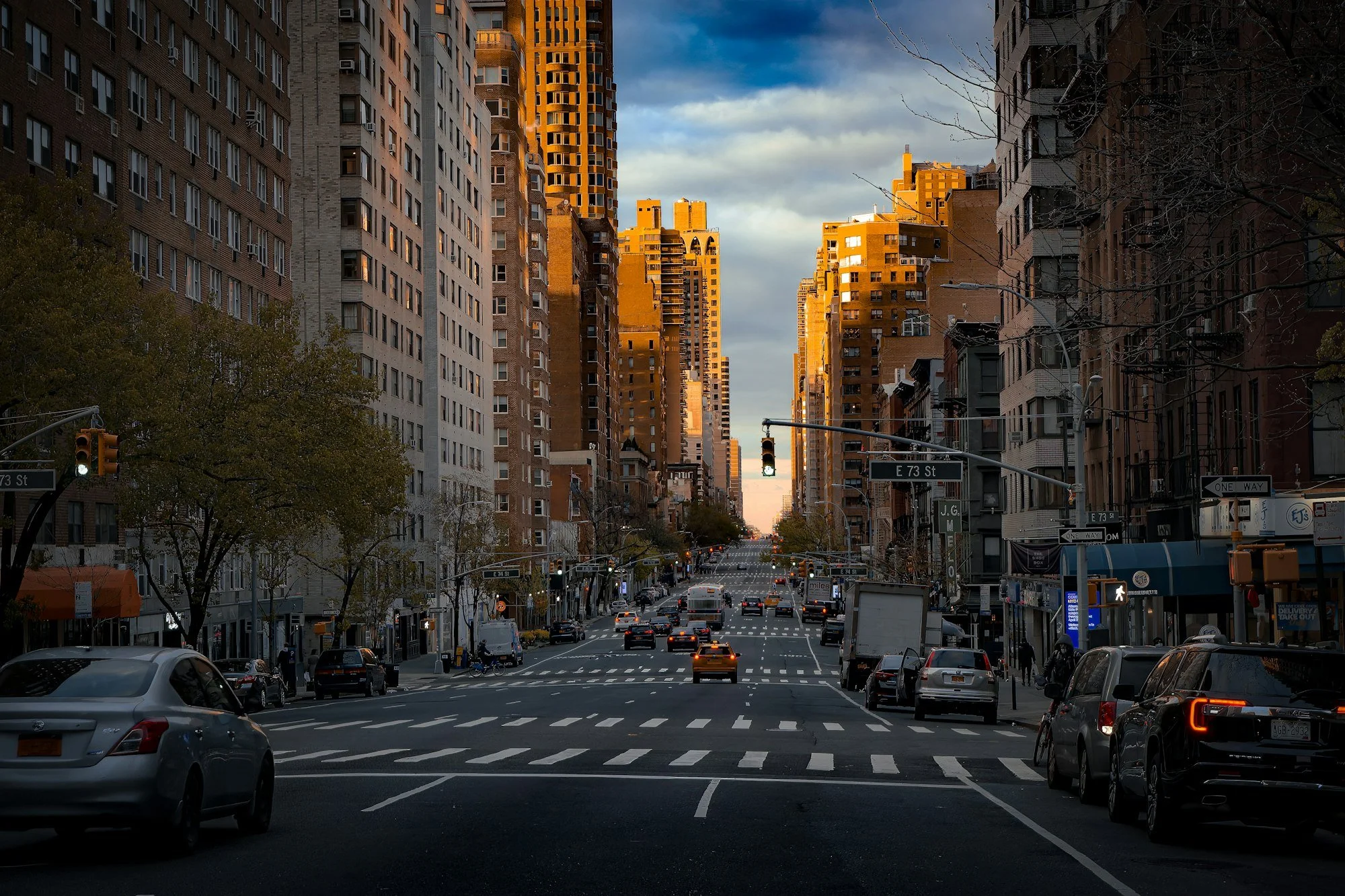
Upper East Side apartments range from high-rise doorman buildings to walk-ups and townhouse apartments. Those buildings ask very different things of a painter. A smooth drywall one-bedroom in a doorman building is a different job from a plaster apartment with original trim, radiators, and a co-op board that wants paperwork before anyone walks in.
The spread is real even across the city as a whole. When NYC Painters surveyed 32 NYC painting companies on the same two-bedroom job, the quotes ran from $3,850 plus materials to more than $16,000, and none of them included New York City sales tax. Same apartment, same rooms, and the top quote was roughly four times the bottom one.
Most of that gap is not profit. It is scope, prep, paint, and assumptions that never got written down.
Step 1: Make sure every quote covers the same rooms and surfaces
Put the quotes next to each other and check, line by line, what is included:
Walls. Which rooms? Hallways and closets count too, and they are where quotes quietly differ.
Ceilings. Included or not? Ceilings can add a meaningful share to the job. The NYC Painters apartment painting cost calculator uses about a 20% allowance on top of the wall cost.
Trim, doors, and frames. Baseboards, door casings, crown molding, and the doors themselves. Many painters price doors per piece.
Closet interiors. Easy to leave out, and they take real time.
Radiators and radiator covers. Common in older buildings, and slow to paint well.
Number of colors. Two colors is a different job from one color everywhere.
If one quote says “paint apartment” and another lists each room and surface, the vague one is not cheaper. It is just harder to hold to anything. Ask the vague painter to break it out the same way as the others.
Step 2: Compare prep, not just paint
Prep is where Upper East Side quotes split the most, especially in older plaster apartments. A low quote often assumes light prep. A higher quote may include work the low one will charge for later as an “extra.”
Look for clear answers to these questions:
Patching: Is it minor nail holes only, or cracks and dents too? Is there a limit?
Plaster repair or skim coating: Is it included, priced per area, or excluded?
Caulking: Gaps along trim and baseboards?
Sanding and priming: Spot-prime repairs, or a full primer coat?
Protection and cleanup: Floor covering, furniture moving and masking, daily cleanup.
If a quote does not mention prep at all, assume it does not include much. Ask the painter to walk the apartment with you and name the walls that need more than a light patch. If they cannot tell you before the job starts, they will tell you during it, and that is when it gets expensive.
Step 3: Check the paint line, finish, and coat count
“Two coats of paint” is not a specification. Under New York’s home improvement contract law, a written contract is supposed to describe the materials, “including make, model number or any other identifying information” (N.Y. General Business Law § 771). Whether a painting-only job falls under that law depends on the scope, so we don’t rely on it here. We just think it sets the right standard for any quote.
A good quote names:
The brand and product line (not just “premium paint”).
The finish for walls, ceilings, and trim. For example: flat ceilings, eggshell walls, semi-gloss trim.
The number of coats, and whether a primer is included for repairs or color changes.
Whether paint is included in the price or billed separately.
That last point matters more than it sounds. In that survey, many quotes left out materials, so the survey added an estimated $700 of premium paint to those quotes to compare them fairly (NYC Painters survey). If one quote includes paint and another doesn’t, the cheaper-looking one may not be cheaper.
Dark-to-light color changes and very bright whites often need an extra coat. If you are going from a deep color to white, ask each painter how many coats they priced.
Step 4: Ask whether sales tax is in the number
This one catches a lot of people. In New York State, painting an existing home is treated as a taxable repair and maintenance service, not a tax-free capital improvement. The state tax department lists “interior or exterior painting of an existing house or structure” among the repair and maintenance services that require a contractor to register for sales tax (New York State Department of Taxation and Finance). The city’s own home improvement exam guide gives “painting the living room” as an example of a repair that does not qualify as a capital improvement (NYC Department of Consumer and Worker Protection).
The combined sales tax rate in New York City is 8⅞%, or 8.875% (New York State Publication 718). On a $6,000 job, that is $532.50. In the NYC Painters survey, the quotes generally left it out. So when you compare, either add tax to every quote or ask every painter to show it. Do not compare one quote with tax against another without it.
Step 5: If your building is older, ask how they handle lead paint
The year 1978 is the cutoff that matters under federal lead rules. Check your building’s construction year with your managing agent before you compare quotes, because the answer changes what a responsible quote has to include.
Here is what applies:
Federal rule (EPA). In homes and apartments built before 1978, anyone paid to do work that disturbs paint generally must be EPA-certified and follow lead-safe work practices. Painters are named specifically. Minor jobs that disturb six square feet or less of paint per room inside are excluded from those work-practice rules (U.S. EPA). The contractor must also give you EPA’s Renovate Right pamphlet before work starts.
New York City guidance. The city’s housing agency advises lead-safe work practices in pre-1978 buildings when work disturbs 2 square feet or more of paint in a room, whether or not children live there. The practices include no dry scraping, plastic sheeting, and daily cleaning with HEPA vacuums. Stricter rules apply where a child under 6 routinely spends 10 or more hours a week (NYC HPD).
What this means for your comparison: plastic sheeting, HEPA cleanup, and careful wet prep take time. A quote that is much lower than the others for an older apartment may simply not include this work. Ask each painter whether their firm is EPA lead-safe certified, ask to see the certificate, and check it in EPA’s directory of certified firms. If your building has lead test records for your unit, share them with every painter. Knowing where lead is, and is not, makes the quotes more accurate.
Step 6: Check what your building will require
Co-ops and condos on the Upper East Side, like most in Manhattan, usually want paperwork before a contractor starts. That typically means a signed alteration or decoration agreement, plus a certificate of insurance naming the building and its managing agent as additional insureds (Brick Underground; The Cooperator).
Two things to compare here:
Can each painter meet your building’s insurance requirements? Get the building’s exact certificate requirements from your managing agent and send the same document to every painter. Ask each one to confirm in writing that they can provide it, and whether any cost is included. In the NYC Painters survey, at least one company charged extra for the insurance certificate (NYC Painters survey).
Does the schedule fit the building’s rules? Many buildings limit contractor hours and elevator use. If your building only allows work during set weekday hours, a three-day estimate can stretch. A painter who has priced around those limits is giving you a more honest timeline.
Hoboken Painter covers the same issue across the river in its guide to condo board rules for painters in Hoboken high-rises. The buildings are different, but the paperwork works much the same way.
Step 7: Read the payment terms before the price
A fair price with bad payment terms is still a bad deal. Look at how and when each painter wants to be paid.
Deposit size. The New York Attorney General advises never giving a contractor a cash deposit before you sign a contract, and trying to negotiate a small deposit if one is required.
Progress payments. For home improvement contracts, state law says progress payments should be tied to specific stages of completed work and bear a “reasonable relationship” to the work done (N.Y. General Business Law § 771).
Where your money is held. For home improvement contracts, payments made before the job is substantially complete must go into an escrow account at a New York bank, or the contractor must provide a bond. You must be told where the money is held (New York Attorney General fact sheet).
Change orders. How are extras priced and approved? You want a written change order you sign before extra work starts, not a surprise on the final bill.
A painter asking for most of the money upfront is a bigger risk than one whose price is a few hundred dollars higher.
A note on licenses
A common question is whether a painter needs a New York City Home Improvement Contractor license. Under the city’s rules, painting or decorating an apartment is not considered “home improvement” when no other home improvement services are provided (NYC DCWP exam guide). Painting also does not need a Department of Buildings permit (NYC Department of Buildings).
That changes if the job grows. If the same contractor is also doing carpentry, cabinet work, or other renovation, ask for their license number and check it with the city. For a painting-only job, put your attention on insurance, lead-safe certification for older buildings, and a clear written scope.
A simple side-by-side checklist
Before you choose, write down the answer to each of these for every quote you have:
Rooms, ceilings, trim, doors, closets included?
Prep described (patching, plaster, caulk, primer)?
Paint brand, product line, finish, coats named?
Paint included in price?
Sales tax (8.875%) included or added?
Lead-safe certified (pre-1978 buildings)?
Can meet building’s insurance certificate?
Schedule fits building work hours?
Deposit size and payment schedule
Change-order process in writing?
Estimated start and finish dates
Once you have every answer written down, the “too good to be true” quote usually explains itself. Either it leaves something out, or it really is a good deal. Either way, you will know.
Want a quote you can compare line by line?
We write itemized quotes that break out rooms, surfaces, prep, paint, and tax, so you can put ours next to anyone else’s. Request a free estimate for your Upper East Side apartment, and send us your building’s insurance requirements up front so the schedule is right from the start. If you want a rough number first, try the NYC Painters apartment painting cost calculator.