
East Village apartments tend to be small, so people expect painting them to be quick and cheap. Sometimes it is. But a lot of the neighborhood's housing is in old walk-up tenements, and those apartments have a few habits that change the budget: rooms strung together with a doorway between each one, kitchens and bathrooms that take up a big share of the space, and walls that have been patched and painted many times.
This post walks through how to scope an East Village apartment before you call anyone, what each line tends to cost, and a worked budget for a typical railroad layout. If you rent, start with the section on who pays, because you may not need to pay at all. For citywide whole-apartment ranges, see our guide to what it costs to paint a Manhattan apartment.
The buildings behind the budget
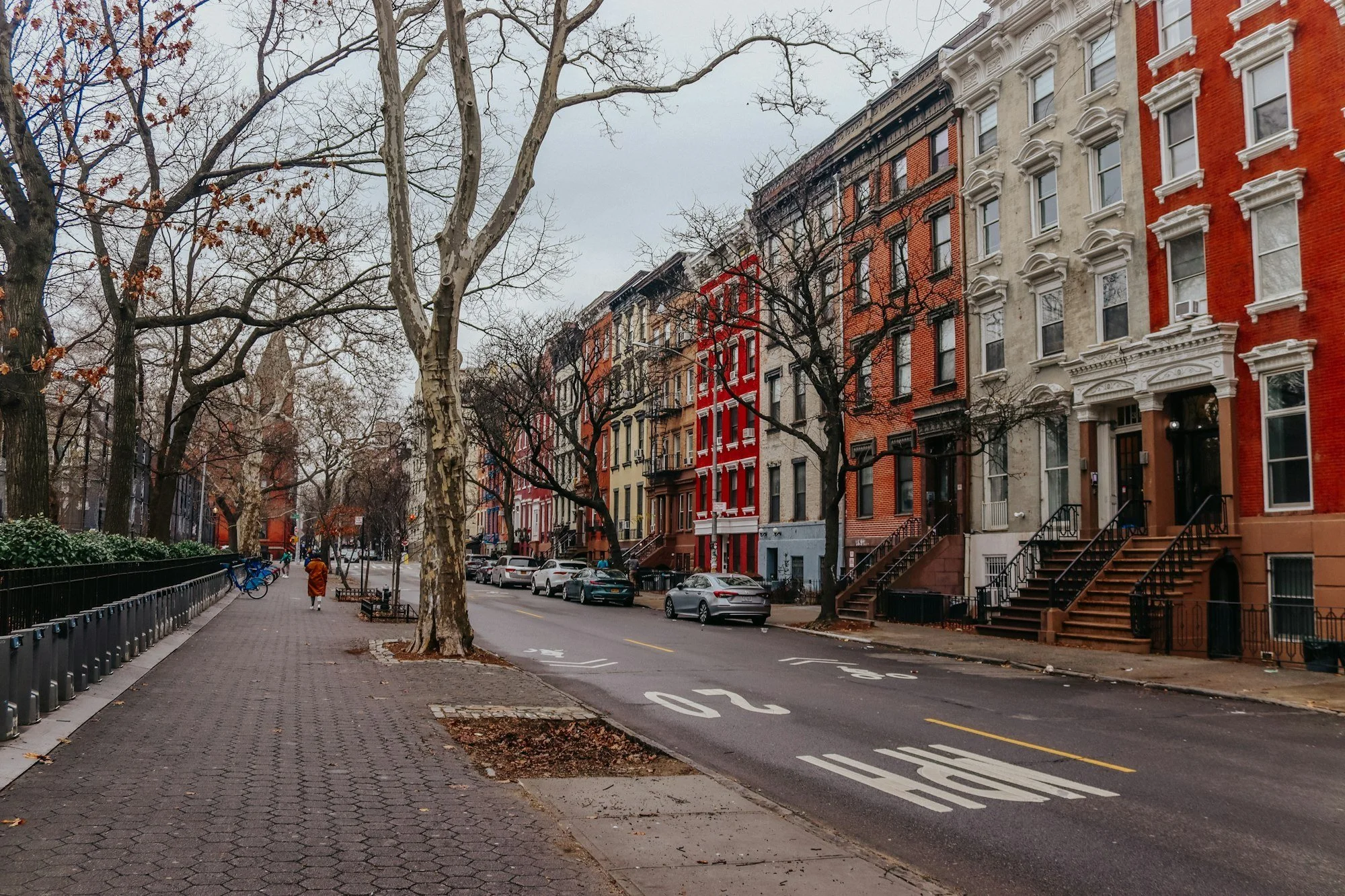
The Landmarks Preservation Commission's East Village/Lower East Side Historic District report, designated October 9, 2012, covers about 325 buildings along Second Avenue and its side streets between East 2nd and East 7th Streets. The report describes three generations of tenements: "pre-law" buildings from before the Tenement House Act of 1879, "old-law" tenements built after it, often on the narrow dumbbell plan with air shafts, and larger "new-law" tenements built after the 1901 act around interior light courts. Plenty of East Village blocks outside the district have the same kinds of buildings.
Many of these apartments are railroad layouts. As Molly Franklin of Citi Habitats put it to Brick Underground, a railroad apartment is "three to five rooms laid out in a long narrow line, like cars in a train," with no hallways. "Each room simply opens into the next."
Interior painting doesn't need a landmarks permit, even inside the historic district. The LPC's permits page says an interior permit is needed only when the work requires a Buildings Department permit, affects the exterior, or involves a designated interior landmark.
If you rent, check who pays first
Before you budget anything, find out whether your landlord owes you a paint job. HPD's tenants' rights page says the landlord must paint occupied apartments in buildings with three or more apartments every three years, citing NYC Administrative Code §27-2013. Most tenement walk-ups have well over three apartments, so check your building.
That doesn't mean you get to choose a deep green and have the landlord pay for it. But if the walls just need a fresh coat and it's been three years, put your request in writing to the landlord before you hire anyone. If you want something the landlord won't do, like a color change, an accent wall or extra prep, and you plan to pay for it yourself, get the landlord's permission in writing first. Your lease may also say what has to happen when you move out.
What to count before you call a painter
A good East Village scope starts with a list. Walk through the apartment and write down:
Each room and its rough size. In a railroad, that's usually kitchen, living room, one or two bedrooms, and a bathroom.
Ceilings. Whether they need paint, and whether they have cracks or water stains.
Doorways and doors. In a railroad, count the openings between rooms, not just the doors. Each opening has casing on both sides, and painting a doorway's trim takes almost as long as painting a door.
Windows. How many, and whether you want the sash painted or just the casing.
Kitchen and bathroom. These are small but slow, with lots of cutting in around cabinets, tile and fixtures.
Exposed brick. Many tenement apartments have a brick wall left unpainted. Decide early whether it stays bare, because painting brick is a different job and hard to undo.
Problem areas. Cracks, peeling paint, old patches, stains, and anything that's been painted over wallpaper.
Colors. One color throughout, or different colors by room.
Once you have that list, you can ask every painter to price the same things. That's what makes quotes comparable.
What each line tends to cost
HomeGuide's 2026 guide to hiring a painter gives national labor estimates for single rooms, first for walls only and then with baseboards, ceiling, doors and trim included:
10 × 12 bedroom: about $391 for walls only, $815 with everything
Living room: about $260 for walls only, $1,015 with everything
Kitchen: about $181 for walls only, $548 with everything
Bathroom: about $101 for walls only, $321 with everything
The gap between those two numbers is the point. In every room, the ceiling, doors and trim cost as much as the walls or more. HomeGuide's door painting guide puts an interior door at $75 to $150 for both sides, and an interior door with its trim at $40 to $125 per side. The same guide prices a door frame alone at $1 to $4 per linear foot, which is the line that covers the open doorways in a railroad.
These are national figures. Manhattan labor generally costs more, and none of this includes repairs. Use them to see where the money goes, not as a quote.
A worked budget for a four-room railroad
Here's how the HomeGuide figures add up for a railroad apartment with a kitchen, a living room, two 10 × 12 bedrooms and a bathroom:
Walls only, every room: $181 + $260 + $391 + $391 + $101 = about $1,324
Walls, ceilings, doors and trim, every room: $548 + $1,015 + $815 + $815 + $321 = about $3,514
So in this example, ceilings, doors and trim add roughly $2,200 to a walls-only job. A railroad apartment can push that number higher than a layout with a hallway, because every room has at least one extra opening to trim on both sides.
The example also shows where you can save. If the ceilings are clean and white, and the doors and trim are in decent shape and staying the same color, a walls-only job is a real option. If the trim is chipped and yellowed, painting the walls alone will make it look worse.
Prep in older walk-ups
Tenement walls have usually been painted many times, often over earlier repairs. Expect some combination of hairline cracks, peeling around windows and in the bathroom, old nail and anchor holes, and lumpy patches from past repairs. Fixing those is where quotes differ the most, so ask each painter to describe what they'll repair and how. Our Chelsea post on how layout and prep change the scope explains the different levels of prep.
Lead is the other prep question in buildings this old. The city's HPD safe work practices page says lead-safe work practices should be used in pre-1978 buildings when work disturbs 2 square feet or more of paint in a room, with stricter rules when a child under 6 routinely spends 10 or more hours a week in the home. If you rent and there's peeling paint with a young child in the home, HPD's tenant page says to report it to the landlord, and to call 311 if it isn't fixed or the work is creating uncontained dust.
Walk-up logistics
Most East Village tenements don't have elevators, so the crew carries everything up and down the stairs. Small rooms with no spare space also mean furniture has to be shifted and covered room by room. Neither of these has a standard published price, but both add time, and a fair quote will account for them. Tell each painter which floor you're on, and ask the super or managing agent about work hours and whether the hallway needs protecting.
Ways to keep the number down
Ask the landlord first if you rent and the apartment is due for painting.
Use one wall color throughout. In a railroad, where you see through several rooms at once, it also makes the apartment feel bigger.
Stay close to the current color so the walls don't need an extra coat.
Leave the trim and doors if they're in good shape and the color isn't changing.
Clear the walls yourself. Take down shelves, art, curtain rods and TV mounts, and move what you can away from the walls.
Paint before you move in if you can. An empty apartment is faster to paint.
Our scope-first budgeting post shows how to sort these into must-dos and things that can wait. For small-apartment color ideas, the NYC Painters article on East Village interior painting ideas for small apartments is worth a look, and the NYC Painters apartment painting cost calculator gives a quick room-by-room range.
Getting quotes you can compare
Hand every painter the same list: rooms, ceilings, doorways and doors, windows, kitchen and bathroom, exposed brick, problem areas and colors. Then ask for a quote that prices each line separately and names the paint and the number of coats. Our post on comparing written painting quotes covers what else to look for, and the one on pricing walls, ceilings and trim separately explains why the split matters.
When you're ready for a real number, request a free estimate. We'll go through the apartment room by room, price each line, and tell you which ones you can skip.