
A SoHo loft can have four completely different surfaces in one room: a brick wall, wood beams overhead, a line of iron columns down the middle and a long plaster or drywall wall. A standard apartment mostly has one surface. Each of the four needs its own prep, its own primer and its own amount of time, and a quote that treats the whole loft as "walls and ceilings" usually leaves something out.
This post goes surface by surface: what we'd check, what the people who make the materials say and how to write it into the scope. If you want whole-apartment price ranges first, start with our guide to what it costs to paint a Manhattan apartment. If you need help measuring tall walls and ceilings, our Tribeca post on loft wall area and ceiling height walks through the math.
Why SoHo lofts have these surfaces
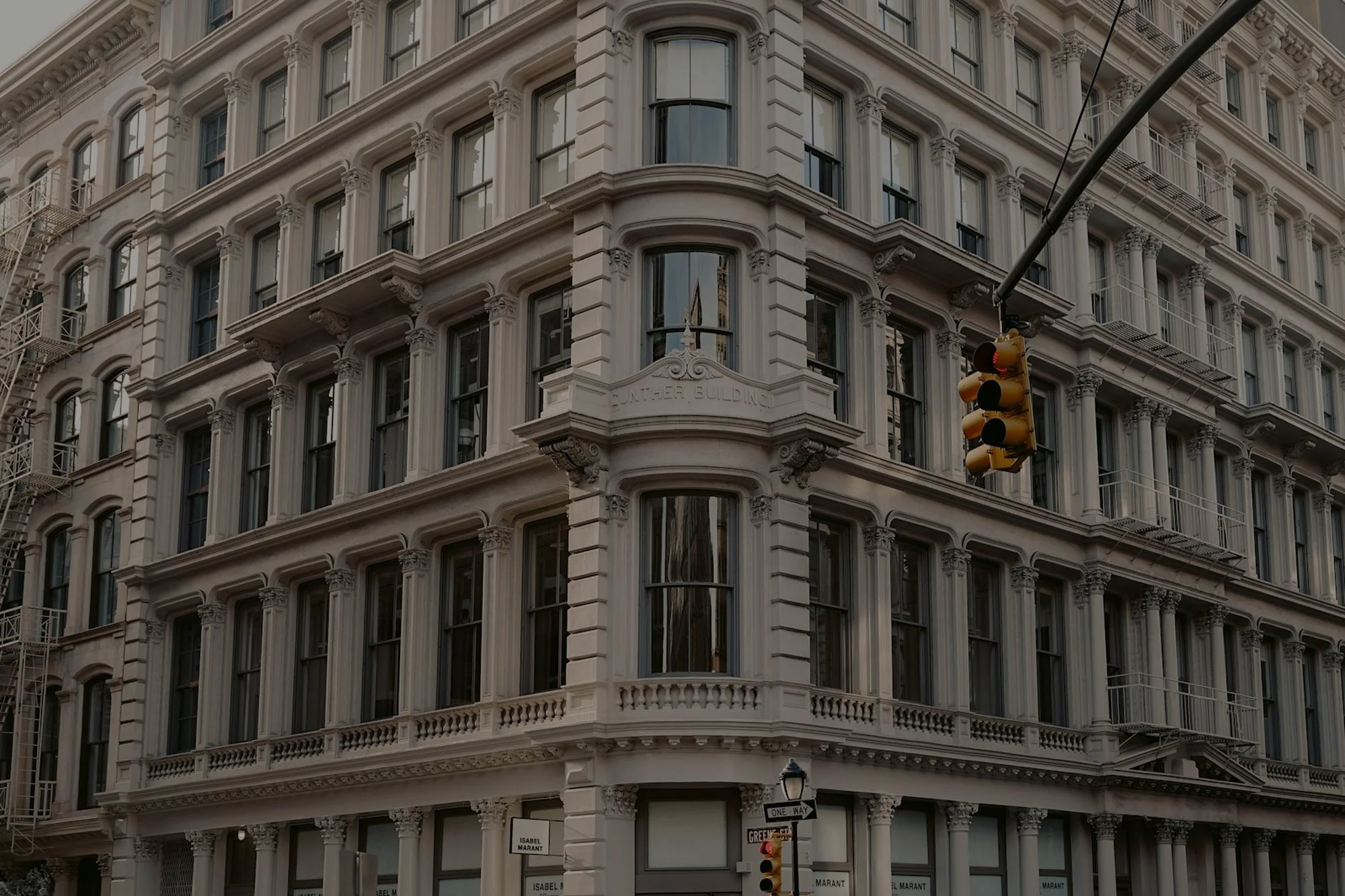
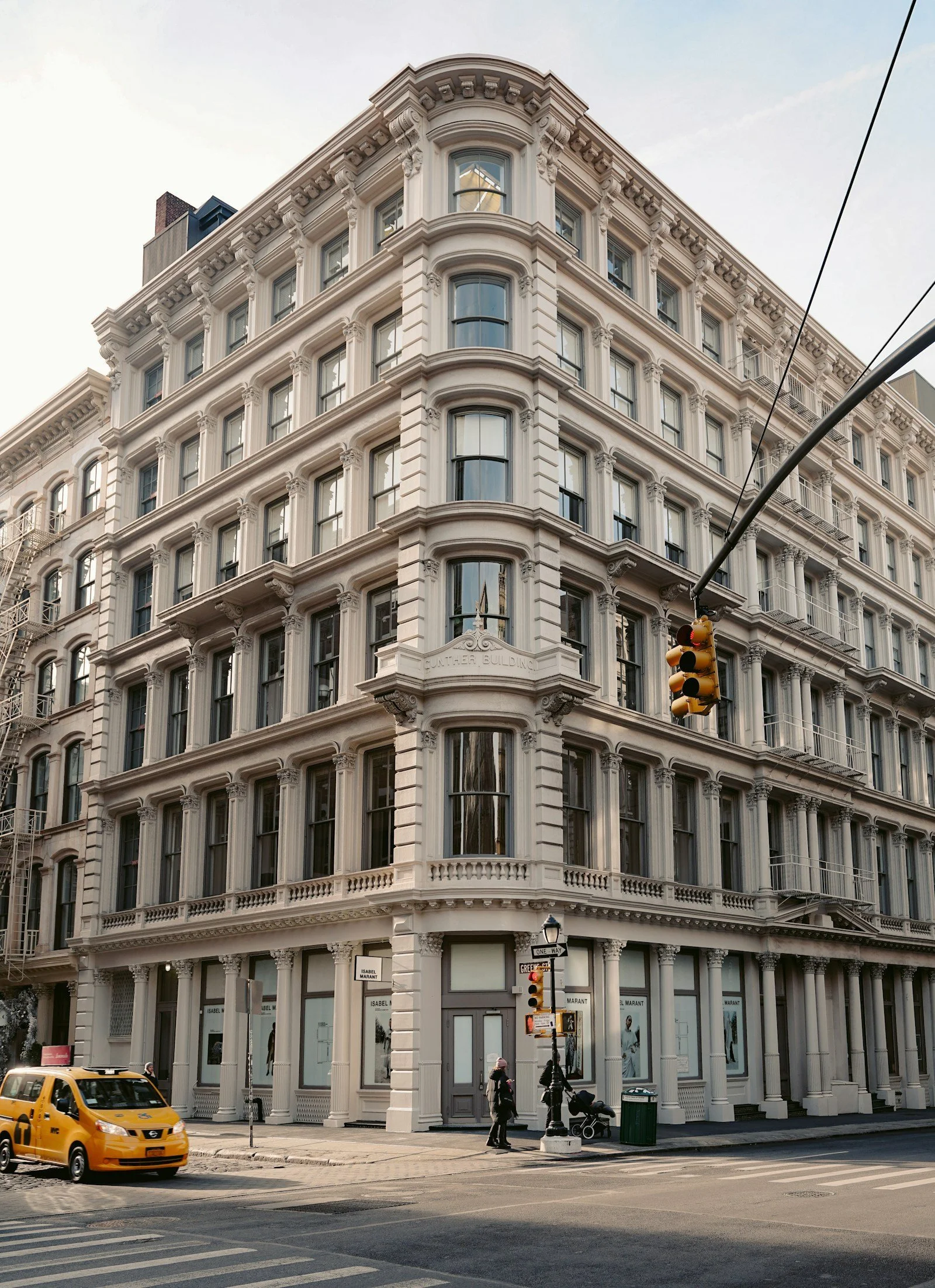
The buildings weren't built as homes. The Landmarks Preservation Commission's SoHo-Cast Iron Historic District designation report (1973) describes a district of 26 blocks and about 500 buildings, put up mostly as stores and warehouses. The same report explains what's inside many of them. To keep floors open, builders used interior cast-iron columns to hold up the floor beams and joists. The joists were often wood, and they rested on brick bearing walls at the outside and on a central row of iron columns. It also notes that artists moved into the "high-ceilinged, empty lofts" in the 1960s because they needed the space.
So the brick, the beams and the columns aren't decoration. They're the structure, and some of it is more than 150 years old. That changes how we prep it.
What you can decide on your own
Most SoHo buildings are in a historic district, so people ask whether they need landmarks approval to paint inside. The Commission's permits page says an LPC permit for interior work is required only when the work needs a Buildings Department permit, when interior work affects the exterior, or when the interior is a designated interior landmark. Painting is on the city's list of work that doesn't need a Buildings Department permit.
Two cautions. If any part of the job involves the windows or anything that shows from the street, call the Commission first. The same LPC page says its staff can tell you whether a permit is needed. And your co-op or condo still has its own rules on insurance, hours and work notices, so ask the managing agent before you book.
Exposed brick: decide first, paint last
The brick wall is the biggest decision in most lofts, because painting it is hard to undo. There are four basic options:
Leave it bare. Clean off loose dust and debris and leave it alone.
Seal it. Use a clear sealer to cut down on dust.
Limewash or mineral paint. These change the color but let the wall breathe.
Standard paint. This gives the most color choices but is the hardest to undo.
The Brick Industry Association's position is clear. On its homeowner FAQ, BIA says it generally does not recommend traditional paint on brick masonry because of the risk of trapping moisture in the brick. If you want the look of painted brick, it recommends a mineral-based paint, which bonds to the masonry and stays vapor-permeable. It also recommends against painting glazed brick at all. That FAQ answer is written about exterior brick. Inside a loft, the same concern applies most to outside walls and to any brick wall that gets damp.
BIA's older Technical Note 6 on painting brick masonry is a good checklist for prep:
Efflorescence. That's the white, powdery salt deposit. The note says to remove it and then watch the surface to see whether it comes back before painting. If it comes back, water is still moving through the wall, and paint won't fix that.
Mortar alkalinity. Mortar is alkaline and can attack some paints, so the note recommends an alkali-resistant primer.
Loose material. All of it has to come off first.
Previously painted brick. This usually needs the most prep of all.
In practice, the steps look like this:
Check the mortar joints. If they're crumbling, that's repointing work for a mason, and it should happen before any finish goes on.
Look for white deposits and damp spots.
Test a small area with the product you're considering, and look at it in daylight and at night.
Then decide.
Rough brick also takes more paint and more time than a flat wall. Benjamin Moore's data sheet for its ben flat paint lists coverage of 400 to 450 square feet per gallon at the recommended film thickness, and it calls for a masonry block filler as the primer on rough or pitted masonry. A rough brick wall won't get that kind of coverage. Expect a separate line for it, priced by its own square footage.
For a rough national reference, HomeGuide puts painting, whitewashing or limewashing brick at $1.50 to $4.50 per square foot. Those figures come from house exteriors, so treat them as a starting point rather than a SoHo price. Our East Village post has more on scoping an exposed brick wall in an older apartment.
Wood beams and joists: stain, clear or paint
If your ceiling shows wood beams or joists, the first question is whether they should be painted at all. Many owners keep them natural and paint only the ceiling between them. That is slow, careful brushwork along every edge, and it should be priced that way.
If the beams are being painted, old wood brings two problems. The first is bleed-through. Knots, sap and the tannins in old wood can stain through a water-based topcoat. Zinsser's technical data sheet for B-I-N shellac primer lists knots, sap streaks and tannin bleed among the stains it seals. It also says to apply it only below 70% relative humidity. Shellac primer uses an alcohol solvent and smells strongly while it dries, so plan for ventilation and tell your neighbors if the building requires notice.
The second problem is what's already on the wood. Many beams have decades of old paint, varnish or soot. Loose coatings have to come off, and in a building put up before 1978 that brings in the lead rules covered below.
Then there's the ceiling itself. Loft ceilings often carry exposed sprinkler pipe, ductwork and conduit. Painting the pipe is normal. Painting the sprinkler heads is not. NFPA's guidance on visual inspection of sprinklers says painted sprinklers can't be cleaned and put back. Make sure the quote says the heads will be covered and left unpainted.
Cast-iron columns: rust, old paint and detail
Cast-iron columns are where a fast painter can do real damage. A paint that works fine on drywall can fail on iron. The best reference we know is the National Park Service's Preservation Brief 27, The Maintenance and Repair of Architectural Cast Iron. It's written for preservation work, but the basics apply to any iron column:
Hand scraping and wire brushing are the most common and least expensive ways to remove loose paint and light rust. They don't get everything, and that's often fine.
Tight old paint can stay. The brief says old paint that's firmly attached can be left if it's compatible with the new coating. Leaving it also avoids the hazards of removing and disposing of old lead paint.
Bare iron gets primed right away. Once iron is cleaned to bare metal, it should be primed immediately with a corrosion-inhibiting primer, before new rust starts. That can happen within minutes to hours.
Latex is not a primer for bare cast iron. The brief says latex and other water-based paints aren't recommended as primers on cast iron because they cause immediate oxidation on bare metal.
The other cost is detail. Many columns have fluting, rings or decorative capitals that can only be painted by brush. Count the columns and list them individually in the scope, with the height of each. A quote that just says "columns included" doesn't tell you how much prep is planned.
Lead paint in older buildings
Every surface above can carry old paint. The city's HPD safe work practices page sets out the rule for buildings put up before 1978. Lead-safe work practices should be used for any repair that disturbs 2 square feet or more of paint in a room, or 10% or more of a small component. That applies whether or not children live there. The same page says contractors doing this work need EPA certification as a renovation firm, with EPA-certified renovators. Ask every painter how they handle this, and ask to see the certificates. Our Upper West Side post covers why trim and windows need special care under these rules.
Large walls: keeping 30 feet of paint even
The plain walls are the easiest surface in a loft, but they're the ones most likely to show a mistake. A wall 30 feet long and 12 feet high, with big windows throwing light across it, will show every lap line and every patch.
Lap marks happen when fresh paint goes over paint that has started to dry. Benjamin Moore's guide to avoiding lap marks comes down to keeping a "wet edge":
Roll from wet to dry. Work back into the paint you just put on.
Work in manageable sections so the edge never dries.
Plan breaks at windows, doors or corners, never in the middle of a wall.
Prime porous surfaces so the whole wall absorbs paint evenly.
On a wall that size, ask how the crew will keep the edge wet. Usually that means more than one painter on the wall at once. Fresh patches matter too. A spot of joint compound that isn't primed will absorb paint differently and show as a dull patch in raking light.
Sheen matters as much as technique. Benjamin Moore's guide to choosing a paint finish says flat paint is the most forgiving of flaws. Pearl is more likely to show lap marks. High gloss can accentuate blemishes and should be avoided on surfaces that aren't completely smooth. On a big, side-lit loft wall, a flat or matte finish hides much more than an eggshell or satin. If the wall itself is wavy, no sheen will hide it. That's when skim coating comes in, which our Chelsea post explains under layout, prep and finish levels.
Writing it into the scope
The simplest way to get comparable quotes is to give every painter the same list, with each surface as its own line:
Brick walls: square feet of each wall and what you've decided (leave, seal, limewash or mineral paint, standard paint). Also list the mortar condition and any white deposits or damp spots.
Beams and joists: linear feet and height. Note whether they're natural or painted, what finish they'll get, and how knots and old coatings will be primed.
Ceiling between beams: square feet, including pipe and duct. List sprinkler heads to be covered.
Columns: how many, their height, how much detail, and what prep and primer is planned for any rust.
Plain walls: square feet, height, condition, and repair or skim-coat level.
Sheen and paint: product names and sheen for each surface.
Lead: the building's age and the lead-safe work plan if it was built before 1978.
Protection and access: floors, windows, scaffold or ladders, and building hours.
For the plain walls and ceilings, the NYC Painters apartment painting cost calculator gives a Manhattan starting range by area. National figures run lower. HomeGuide's cost to hire a painter puts typical interior work at $1 to $6 per square foot of paintable area. Brick, beams and columns sit on top of either number, because they're priced by their own area, length or count.
A quick example of how the lines add up. A brick wall 30 feet long and 12 feet high is 360 square feet before you subtract windows. At HomeGuide's $1.50 to $4.50 per square foot for brick, that one wall is $540 to $1,620 at national rates, before any SoHo factors. Do the same for each line and you'll see where the money goes before anyone gives you a total.
Before you book
Walk the loft with each painter and point at every surface on the list. Ask what they'd do with the brick, what primer they'd use on the beams and the iron, and how they'd keep the long walls even. If two painters give you very different numbers, the scope list will show you why.
If you'd like us to look at your loft, you can request a Manhattan painting estimate. We'll go through each surface and write it up line by line.