
People often tell us the size of their loft in square feet and ask what it costs to paint. That number is a fine start for a real estate listing, but it doesn't tell a painter much. A 1,000-square-foot loft with 12-foot ceilings, a row of columns and one long brick wall is a very different job from a 1,000-square-foot apartment with 8-foot ceilings.
Painters price surfaces: how many square feet of wall, how many square feet of ceiling, how high they are, and what shape they're in. This post shows how to measure a Tribeca loft the way we do, so you can get a realistic number before anyone comes out, and so you can check that every quote is pricing the same job.
If you want whole-apartment price ranges first, start with our guide to what it costs to paint a Manhattan apartment. If you're still deciding what to include, our Midtown East post on building a scope-first painting budget walks through that step.
Why Tribeca lofts are measured differently
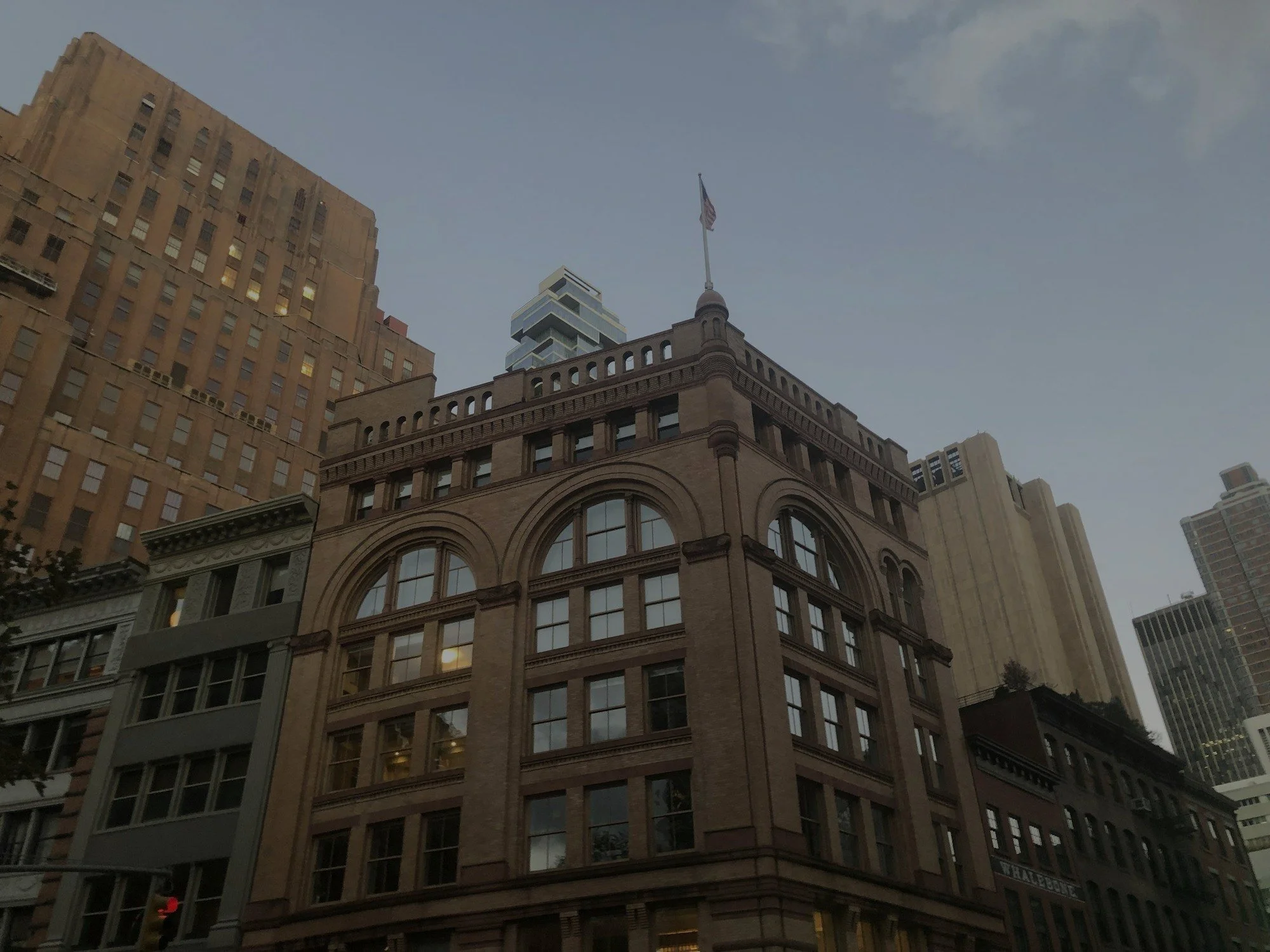
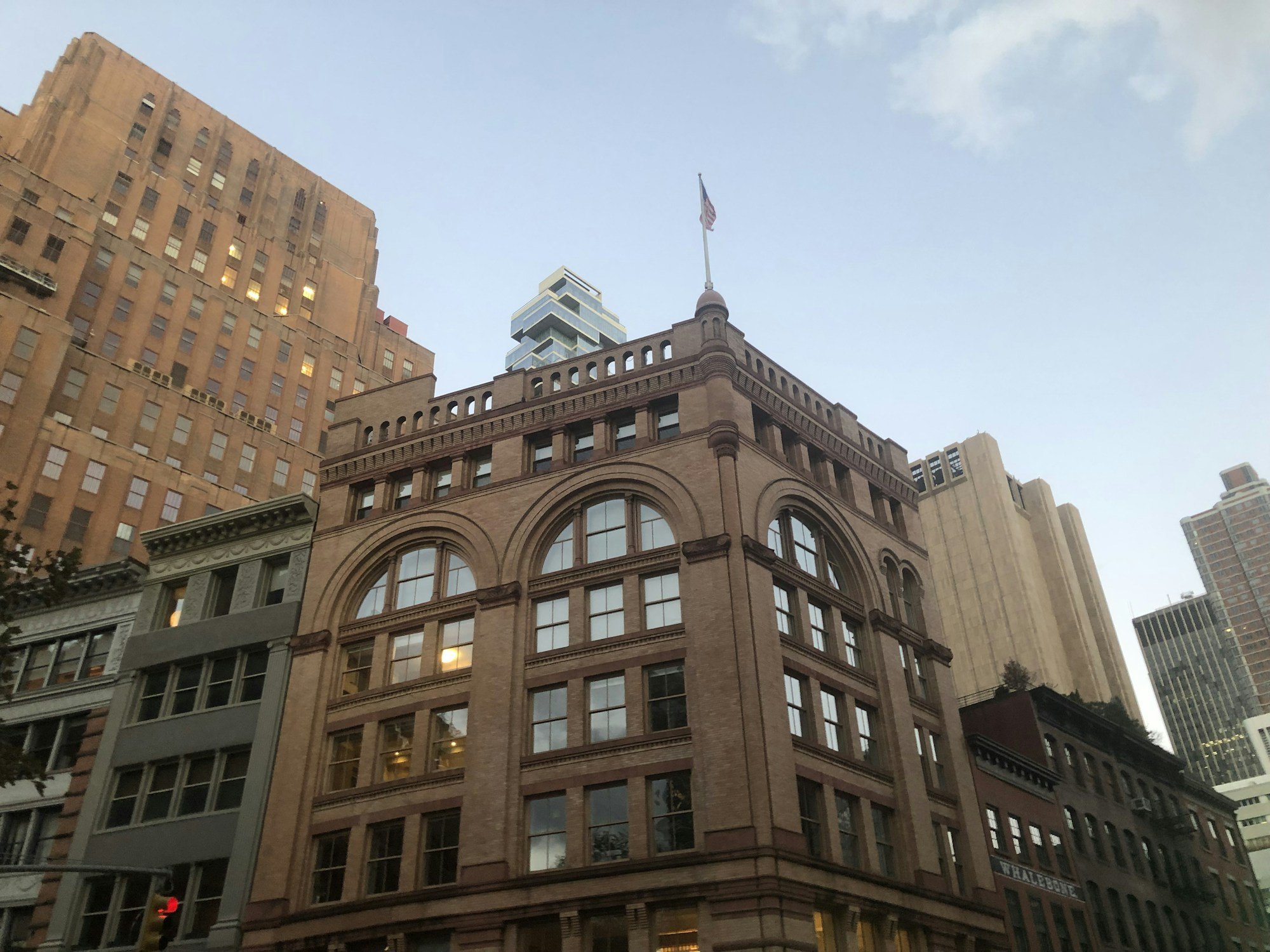
Much of Tribeca was built for business, not housing. The Landmarks Preservation Commission's Tribeca West Historic District report (designated May 7, 1991) covers some 220 buildings and says the district is dominated by store-and-loft and warehouse buildings built roughly between 1860 and 1910. The Tribeca North report (December 8, 1992) describes streets lined with brick warehouses, most built in the 1880s and 1890s. The Tribeca South and Tribeca East districts were designated in December 1992, and Tribeca South was extended in 2002.
Buildings designed for storage and trade, later turned into homes, often end up with big open rooms, tall ceilings, columns, and long walls. Every one of those adds surface that floor area doesn't show. Newer condo buildings in the neighborhood can have tall ceilings and long walls too. So whatever building you're in, it's worth measuring.
Step 1: Measure the wall area
The basic formula is simple:
Wall area = perimeter of the room × ceiling height − large openings
Here's how to do it.
Measure each wall's length and add them up to get the perimeter.
Measure the height from floor to ceiling. In a loft, measure in a few places. Old floors and ceilings aren't always level.
Subtract large openings like big windows, wide doorways, and openings between rooms. Most painters don't bother subtracting small windows or standard doors, because cutting around them takes about as long as painting the space would.
Add both sides of any partition wall. A wall that divides the bedroom from the living area has two paintable faces.
A worked example
Take a main living space that's 40 feet by 25 feet, with 12-foot ceilings and six large windows, each about 4 feet wide and 8 feet tall.
Perimeter: 40 + 25 + 40 + 25 = 130 feet
Gross wall area: 130 × 12 = 1,560 square feet
Windows: 6 × (4 × 8) = 192 square feet
Net wall area: about 1,370 square feet
That's 1,000 square feet of floor and almost 1,400 square feet of wall, before counting columns, partitions, or the ceiling.
Now picture the same room with 9-foot ceilings: 130 × 9 = 1,170 square feet, minus the same windows, is about 980 square feet. Those three extra feet of height add almost 400 square feet of wall to paint, about 40% more, in one room.
Columns and soffits
Columns are easy to forget. For a round column, multiply its diameter by about 3.14 to get the distance around it, then multiply by the height. A column 18 inches across and 12 feet tall is about 1.5 × 3.14 × 12 ≈ 57 square feet. Five of them add up to nearly 300 square feet, and every one needs careful cutting in at the top and bottom. Square columns are simpler: add the four sides and multiply by the height.
Soffits and dropped ceilings that hide ducts or pipes add two long faces plus a bottom. Measure them like short walls.
Step 2: Measure the ceiling
For a flat ceiling, the area is usually the same as the floor area of the room. Our 40 × 25 room has a 1,000-square-foot ceiling.
That's where the easy part ends. Exposed beams, ductwork, sprinkler pipes, and old tin ceilings all add surface and slow the work down. If your ceiling has any of these, note them separately, because they're priced as detail work, not as flat area. Exposed beams and pipes will get their own post soon.
Step 3: Turn area into paint
Paint is the smaller part of the cost, but knowing the quantity helps you check a quote.
Benjamin Moore lists its Waterborne Ceiling Paint at 400 to 450 square feet per gallon. Its Regal Select wall paint has the same listed coverage. Both data sheets note that actual coverage depends on surface texture and porosity, so rough plaster or bare patches will use more.
For our example room with two coats:
Walls: 1,370 × 2 = 2,740 square feet ÷ 400 ≈ 7 gallons
Ceiling: 1,000 × 2 = 2,000 square feet ÷ 400 = 5 gallons
So about 12 gallons for one big room, plus primer for any repairs. A whole loft can easily take two or three times that. If a quote's material line seems far off from your own math, ask why.
Step 4: Account for ceiling height
Height costs more than just the extra surface. It changes the equipment, the setup, and how fast the crew can work.
HomeGuide's 2026 room painting guide says ceilings higher than 10 feet increase painting cost by 10% to 50% or more, because they add wall surface and need more equipment and safety measures. Angi's cost guide says a standard 10-foot ceiling adds about $1 per square foot, and that ceilings above 12 feet tend toward the high end of its range because of the extra equipment.
Here's what that looks like in practice.
Up to about 10 feet: a step ladder and an extension pole usually handle it.
Around 11 to 14 feet: taller ladders, planks, or a rolling scaffold. Every time the scaffold moves, someone has to check the floor protection under it.
Higher than that, or over stairs and lofts within the loft: larger scaffolding that may need to be delivered, carried in, and assembled. In a building with a small elevator, getting it upstairs is part of the job.
Height also slows cutting in. A clean line where a 12-foot wall meets the ceiling is done from a ladder or scaffold, a few feet at a time. Long walls need to be rolled top to bottom without stopping, so the paint doesn't dry in stripes. That can mean two or three painters on one wall at the same time.
NYC Painters has a good overview of Tribeca lofts with brick, beams, and high ceilings if you want to see more of what goes into the work.
Step 5: Rate the prep
Big walls magnify every flaw. A long, bare wall lit by tall windows shows every patch, seam, and dent. So prep matters more in a loft than in a small apartment.
Walk each wall and give it a rating:
Sound: nail holes and scuffs. Standard patching, which most quotes include.
Repairs needed: cracks, old anchors, water stains, loose tape at seams. These need patching, sanding, and primer before paint.
Uneven surface: old plaster with lots of patches, or drywall with visible joints in strong side light. This is where a skim coat comes in.
Angi's data puts skim coating at $1.10 to $1.30 per square foot, on top of the painting. On our 1,370-square-foot example, that's roughly $1,500 to $1,800 to skim every wall, or a few hundred dollars for one wall facing the windows. Hoboken Painter's guide to skim coating walls explains the process. Our Chelsea post on how layout and prep change the scope explains the drywall finish levels and when a skim coat is worth it.
Exposed brick is its own decision: leave it, seal it, or paint it. Painting brick that has never been painted is hard to undo, so treat it as a separate line in the scope.
Lead paint. Many Tribeca buildings are far older than 1978. The city's HPD safe work practices page says lead-safe work practices should be used in pre-1978 buildings when work disturbs 2 square feet or more of paint in a room, with stricter rules under Local Law 1 when a child under 6 routinely spends 10 or more hours a week in the home. The EPA's renovation, repair, and painting program covers the federal rules. Scraping and sanding old trim, columns, or plaster can add containment and cleanup to the job, so ask any contractor how they'll handle it and to show current certification.
Landmarks. Being in a historic district doesn't usually affect interior painting. The LPC says interior work needs its permit only when it requires a Buildings Department permit, affects the exterior, or is in a designated interior landmark.
Putting numbers on the example
Here's a rough national-average picture for our example room. This is an illustration, not a quote.
Walls (1,370 square feet): HomeGuide puts labor at $1 to $3 per square foot of surface area, so roughly $1,400 to $4,100.
Ceiling (1,000 square feet): HomeGuide puts ceiling painting at $1 to $2 per square foot, so roughly $1,000 to $2,000.
Height: add 10% to 50% or more for ceilings over 10 feet, per HomeGuide.
Prep: anything from standard patching to $1,500 or more for a full skim coat.
That's one room. Manhattan labor generally runs above national averages, and building logistics add time, so read these numbers as a floor. For local figures, the NYC Painters survey of two-bedroom apartment quotes from 32 companies ranged from $3,850 plus materials to more than $16,000, for apartments that mostly don't have loft-height ceilings. The NYC Painters apartment painting cost calculator gives a quick range by room. Sales tax applies on top. Our post on comparing written painting quotes covers that and other lines to check.
Questions to ask when you get quotes
What wall and ceiling area did you measure? If two painters' numbers are far apart, one of them missed something.
What equipment will you use, and is setup included? Ask how scaffolding gets in and out of the building.
How many painters on the long walls? This tells you whether they've planned for wet-edge rolling.
What prep is included for each wall? Standard patching, repairs, or skim coat. Get it in writing.
Are columns, soffits, beams, and brick included or separate?
How many coats, and what paint? Check the gallons against your own math.
Our post on pricing walls, ceilings, and trim separately shows how to ask for each as its own line, which makes loft quotes much easier to compare.
When you want a number for your own loft, request a free estimate. We'll measure the walls and ceilings with you, check the height and the prep each surface needs, and show you how each one adds to the price.