
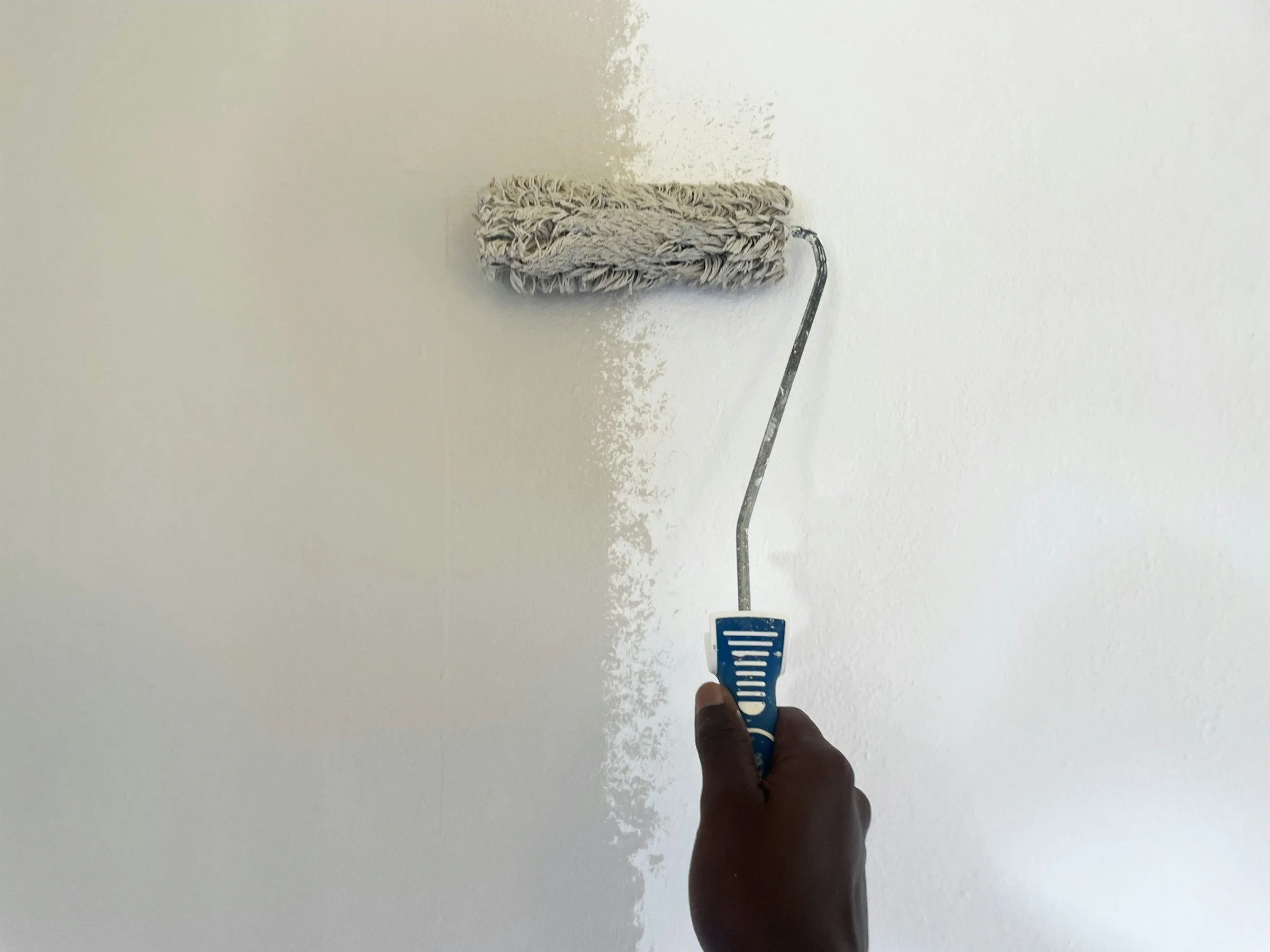
Every week someone calls us and opens with the same question: what will this cost? Fair question. Painting an apartment in Manhattan is not cheap, and quotes vary wildly depending on who you call and what your building requires. We would rather give you real numbers and real context, so you can tell a fair quote from a bad one before you sign anything.
Here is what apartment painting actually costs in Manhattan in 2026, along with the things — building paperwork, lead paint rules, wall condition — that move the number up or down.
What you'll actually pay
Start with the rate that most NYC painters work from: roughly $2 to $6.50 per square foot of wall, depending on condition and paint choice. That is the number behind our NYC apartment painting cost calculator, and it is the fastest way to budget your own apartment, because the calculator also lists the wall area a typical apartment contains:
ApartmentWall area (typical)Walls only, at $2–$6.50/sq ft Studio~700 sq ft~$1,400–$4,500 One-bedroom~1,000 sq ft~$2,000–$6,500 Two-bedroom~1,500 sq ft~$3,000–$9,750 Three-bedroom~2,000 sq ft~$4,000–$13,000
From there the add-ons are predictable: ceilings add about a 20% allowance on the wall cost, trim adds about 15%, doors run $100–$200 each, closets $75–$150 each, and a furnished apartment adds roughly 10% for moving and protecting furniture (NYC Painters cost calculator).
If you want a reality check on the high end, we ran one. In early 2026 we surveyed 32 NYC painting companies for quotes on a standard two-bedroom — walls, ceilings, baseboards, doors, and closets — and the spread was huge: from $3,850 plus materials to over $16,000, with an average around $8,000. Our own ballpark for that apartment was $5,000, and premium paint for a job that size runs about $700. None of those quotes included the city's 8.875% sales tax, so budget for it.
For comparison, across the Hudson the same jobs run cheaper: our Jersey City pricing guide lists a one-bedroom at $1,500–$3,000 and a two-bedroom at $1,800–$5,000 in standard labor, and a single 12×12 room at $500–$900.
If you want to see how we put a quote together, our free estimate page walks through exactly what we look at. And if you are comparing painters, our reviews page is a reasonable place to see what past clients in your situation ended up paying.
What moves the price
Wall condition. This is the big one in pre-war buildings. Cracks, old patch jobs, and loose plaster all need to be addressed before paint touches the wall, and skim coating a badly damaged wall adds real labor. A paint job is only as good as the prep under it — that is not a slogan, it is a cost line on your quote.
Ceilings and trim. Ceilings add about a 20% allowance on the wall cost, trim about 15%, and full trim can add a day or two of crew time on a two-bedroom (NYC Painters cost calculator, Hoboken Painter). Trim, radiators, and doors are usually priced per piece, so a pre-war apartment with original millwork costs more than a modern box.
Color changes. Going from a dark color to white can take three coats plus a tinted primer, where a same-tone refresh takes one or two (Hoboken Painter). Every additional coat is more paint and more labor hours.
Ceiling height. A 9-foot ceiling is normal in Manhattan. Wall area scales with height, so 10-foot ceilings mean about 25% more wall than the same room at 8 feet (NYC Painters cost calculator) — and 11-foot pre-war ceilings add scaffolding and cutting-in time on top of that.
Paint itself. We typically paint with Benjamin Moore Regal Select — it runs about $80–$90 a gallon at the pro counter (NYC Painters cost calculator), and the manufacturer's specs explain why coverage matters: one gallon covers roughly 400–450 square feet, dries to the touch in about an hour, and can be recoated in one to two hours at normal room temperature (Benjamin Moore's technical data sheet). Cheap paint with poor coverage can add a whole extra coat to your job — you pay for that in labor, not just paint. On a walls-only job, labor is typically 70–80% of the invoice (Hoboken Painter), so anything that adds hours matters more than anything that adds paint.
Your building's paperwork
In most of the country, you hire a painter and they show up. In a Manhattan co-op or condo, there is a gate in front of that.
Co-op and condo boards treat painting as a "decorative alteration" — lighter paperwork than a renovation, but not zero. Buildings typically require a signed alteration or decoration agreement, and they require your painter to be licensed and insured, with the co-op named as an additional insured on the policy (The Cooperator). The certificate of insurance usually must show general liability and workers' compensation, naming the board and the managing agent as additional insureds (Brick Underground).
What this means for you: before you hire anyone, ask your managing agent for the building's exact COI requirements and work-hour rules, and hand them to your painter. A painter who works in co-ops regularly will have their insurance broker issue the certificate in a day. A painter who has never dealt with a board can stall your job for weeks. We handle this paperwork for clients all the time — you can see some of those jobs on our work page, including apartments like the ones on our Hoboken home project. Our sister sites cover the same ground for condo board rules in Hoboken high-rises and COI rules in Jersey City condo buildings.
Renters have it easier, but not free: most leases and management companies require notice before painting, and some require the same insurance documentation. If you rent across the Hudson, our sister site Hoboken Painter covers the same ground for Hudson County buildings.
If your building went up before 1960: lead paint rules
A large share of Manhattan's housing stock is pre-war, and that puts you inside New York City's lead paint rules.
Local Law 1 of 2004 requires owners of buildings built before 1960 to presume that paint is lead-based paint and to address hazards, particularly in units where a child under six lives (NYC HPD). Local Law 31 of 2020 went further: it required XRF testing of paint in all rental units and common areas of pre-1960 buildings by August 9, 2025, at the stricter 0.5 mg/cm² standard (NYC HPD).
Why does this matter to someone who just wants white walls? Because safe work practices kick in when work disturbs more than two square feet of paint in a room — no dry sanding, contained work areas, wet methods and HEPA cleanup (NYC HPD). That is more setup and more labor, and honest quotes reflect it. If your building has XRF test records from the LL31 deadline, ask for them — knowing where lead is (and is not) makes the job cheaper and safer. We have written in detail about painting over lead paint in pre-war buildings if you want the full picture.
If your building is in New Jersey instead, the rules differ: New Jersey's lead-safe certification regime for rental dwellings was extended by P.L. 2024, c.74, and certificates are now valid for three years (N.J.S.A. 52:27D-437.16). Our sister site NJ Painters covers how that works in practice.
Finishes: what to put on the walls
Finish choice changes how a room wears more than most people expect, and it rarely changes the price much — labor is the same, so pick for performance.
Flat or matte hides wall imperfections, which matters in older plaster, but it scuffs and holds grease. We use it mostly on ceilings and low-traffic rooms. Eggshell is the workhorse for Manhattan apartments: a slight sheen that cleans up with a damp cloth, which is why it ends up on hallways, living rooms, and kitchens. Satin or pearl stands up to scrubbing and works in bathrooms, kids' rooms, and anywhere a radiator heats a wall. Semi-gloss is for trim, doors, and cabinets — durable, but it shows every ripple in the surface underneath, so the prep has to be right.
One practical note on timing: Benjamin Moore's Regal Select dries to the touch in about an hour and takes a second coat in one to two hours, but painted surfaces should not be washed for two weeks while the film fully cures (Benjamin Moore's technical data sheet). Plan accordingly if the job lands right before a move-in or a party.
If you are torn between colors, most Manhattan paint suppliers sell small sample sizes — paint a two-foot square on two different walls and live with it for a few days before committing. North-facing and south-facing rooms in the same apartment can make the same color look like two different paints.
How long the job takes
A two-bedroom with two painters typically runs two to four days, and a furnished apartment adds about half a day for moving and protecting furniture (Hoboken Painter). Smaller apartments scale down from there. Two things stretch those numbers in Manhattan buildings: freight-elevator windows (many buildings restrict contractor hours to mid-day slots) and work-hour rules in the alteration agreement. If your building only allows work from 9 a.m. to 4 p.m. on weekdays, a two-day job can become three.
How to keep the bill down
None of this is secret — it is just what adds up on real jobs:
Bundle rooms. Setup, protection, and travel are fixed costs. Painting two rooms in one visit is much cheaper per room than two separate visits.
Skip the ceiling if it is sound. A clean ceiling in a flat finish often does not need repainting. Ask your painter to look at it in daylight before you commit.
One color per room. Each color change means cutting in and cleaning tools again.
Do repairs during the paint job. Patching a wall during a repaint is cheap. Calling a painter back for a patch later is not.
Get an itemized written quote. If the quote does not break out prep, paint, and ceilings, you cannot compare it to anything.
The short version
Budget your apartment by wall area — roughly $2 to $6.50 per square foot of wall, plus about 20% for ceilings — and sanity-check the result against our 2026 survey, where the average full two-bedroom repaint in NYC came in around $8,000. Expect your building's COI and alteration paperwork to shape the schedule as much as the painting does. If your building is pre-1960, deal with a painter who understands the lead rules — it protects you as much as anyone.
When you are ready for real numbers for your apartment, request a free estimate — we quote Manhattan apartments every week, and we are happy to walk your building's requirements with you. For work outside Manhattan, our sister sites NYC Painters, Broadway Painters, Hoboken Painter, and Jersey Painter cover the rest of the metro area.
Photo by Andrew Itaga on Unsplash.